
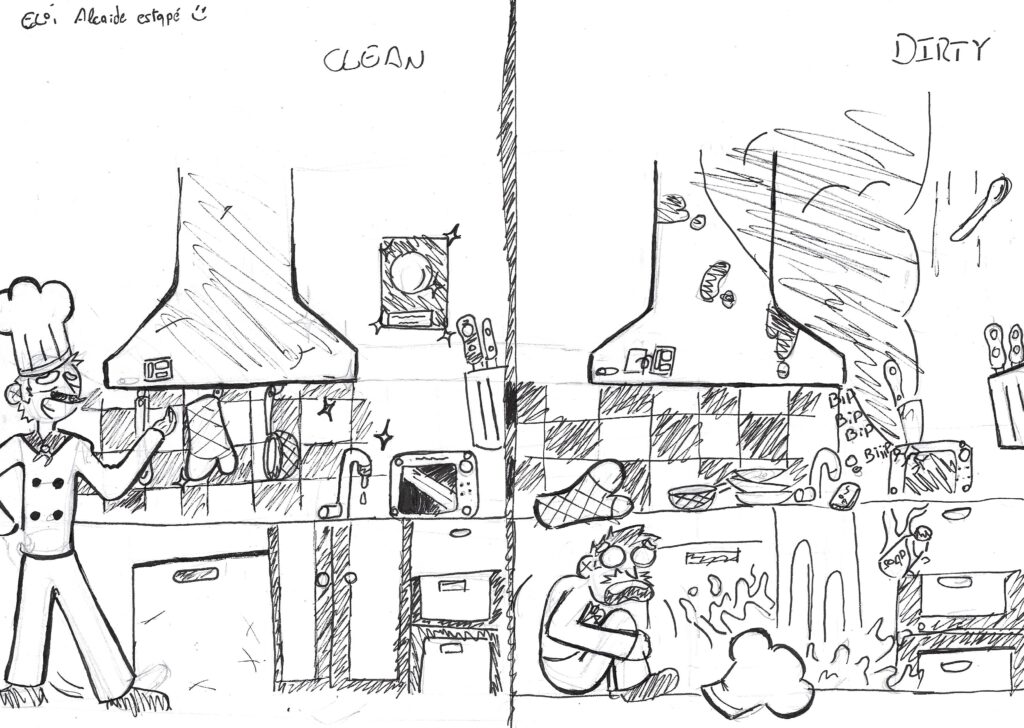
Once upon a time, in a small market, there was a professional named Gusteau. He was known for being highly skilled, but he had the bad habit of keeping his workspace dirty and disorganized.
One day, he decided to launch his own project to share his excellent reports and documents with everyone in the market. People were excited to see Gusteau’s work, and on the day of the opening, his company was full of eager clients.
Gusteau began producing his most exquisite documents, but around him were piles of dirty plates, food scraps on the floor, and utensils scattered all over his workspace. Despite his professional talent, the disorganization of his workspace affected the quality of his work.
While searching for a pan, a steak burned. While cleaning a pot to prepare a soup, the sugar for a dessert turned bitter. He wasn’t used to working for so many people, and the usual mess in his home workspace was starting to impact the quality of his output.
Clients began to notice that the documents were not as good as expected. The content was dry, the data was outdated, and the structure lacked clarity. People began to complain, and some even left without finishing their business.
Gusteau, distressed, didn’t understand what was going wrong. However, a wise elder who had been observing from a corner of the company approached him and said:
“Gusteau, your talent is undeniable, but the quality of your work is being affected by the mess and clutter in your workspace. To be a true professional, you must keep your space clean and organized.”
Ashamed, Gusteau understood the elder’s wisdom and decided to change his habits. He spent days cleaning and organizing his workspace, and he learned to keep it that way while working.
Over time, the quality of his work improved significantly, and his project became the most successful in the market. Clients returned and praised Gusteau’s documents. He never forgot the importance of keeping his workspace clean and orderly.
Do you know someone like that? Someone with great talent, but whose lack of organization prevents their work from shining?
In fact, no matter how talented you are at your craft, disorder can affect the quality of your work. It’s important to maintain a clean and organized environment to effectively manage our time, be productive, and achieve excellence.
When we talk about order, we refer to the proper arrangement of elements within a system, structure, or space. In our daily lives, it refers to how we organize our belongings, our tasks, our thoughts, and even our emotions. Order helps create structure and clarity in our lives, which in turn allows us to be more efficient and effective in our work.
For example, if your workspace is disorganized, you’re likely to feel overwhelmed and distracted. This can make it difficult to concentrate and be productive. On the other hand, if your workspace is clean and organized, you’re more likely to feel focused and motivated to work.
Moreover, order can also reflect the outcome of our work. When we make an effort to keep our things and our space organized, we demonstrate a responsible and careful attitude toward our work. This can be highly valued in professional environments and can help us earn the respect and appreciation of our colleagues and supervisors.
As an example… During the time I helped my parents in the butcher shop, I had the chance to enter several kitchens while delivering products. Based on the order perceived in the kitchen (and the way coworkers treated each other), you could tell the caliber of the restaurant.
We must develop systems that help us keep our workspace—both physical and mental—organized. This will allow our talent to flourish and be seen.
Later on, I’ll talk about systems that help maintain order in both our physical and virtual environments. Personal organization systems are essential for effective time management and productivity. I’ll leave you with three key quotes:
Your email inbox is not a storage space; it’s a distribution point.
If you have multiple task intake points, you might lose control of what needs to be done. Redirect all entry points into a single one.
Technology tools help (Outlook / Planner / Trello / …), but what really matters is that the system is robust, reliable, and independent of the tool.